

Finding Purpose in the Work
Designing for Family-Building at Sprout


I started my role as Design Lead at Sprout in January 2025, but the story really begins the year before.
2024 was a big one for me personally. My partner of 12 years, Sam, and I got married, a meaningful milestone that marked the close of one chapter and the beginning of another as we officially became a family. As the youngest of three sisters, family has always been central in my life, and I’m lucky to be deeply woven into my older sisters’ families as a loving, and admittedly doting, auntie.


In the years leading up to our wedding, my middle sister, Meg, was navigating a very different chapter.
After difficulty conceiving naturally, Meg began a fertility journey that included working with Twig Fertility Clinic and a broader care team as she navigated her way toward parenthood. Eventually, she did become pregnant, and with twins. A beautiful outcome, but not an easy journey to reach, or what came next.
After a high-risk pregnancy, the twins arrived at just 28 weeks, coincidentally on our wedding night (!!!) They spent nearly three months in the NICU before coming home. The care they received was remarkable, and our family felt deeply grateful.
Watching Meg and her husband, Brett, navigate their family-building journey, and everything that followed, was my first real, up-close look at how heavy the process can be. Not just physically, but emotionally, financially, relationally, and professionally.
While this isn’t my story to tell in detail, what stayed with me was the importance of family and community during that time, and the way people showed up. Just as clearly, it revealed how uneven access to that support can be. Not everyone lives close to family or has a strong relationship with them. Not everyone has access to publicly funded healthcare. Not everyone has workplace benefits to help offset the cost of treatments that fall outside of coverage. Not everyone has the flexibility, stability, or safety net to help carry the weight of it all. And for some, despite every effort, the outcome remains uncertain.
There are many barriers that can make the family-building process even more challenging than it already is, and these barriers disproportionately affect women and 2SLGBTQIA+ individuals in the workplace.
So when Sprout’s co-founder and COO, Suze Mason, reached out in the fall of 2024 about a design role they were hiring for, it didn’t take long for me to feel aligned once I understood Sprout’s values and purpose as Canada’s only digital health and benefits platform for fertility and family-building.
Where Work and Values Met
At the end of summer 2024, I left my role as an Associate Creative Director at an advertising agency to give myself the space to really think about what I wanted to be doing professionally. Interestingly, this coincided with the period when my niece and nephew were wrapping up their time in the NICU, a moment that naturally slowed everything down. It gave me time to show up where I could, to visit often, and to be present for my family.


As a designer, I’ve always sat a bit uncomfortably between two worlds: product design and brand design. For anyone outside the industry, the distinction can feel fuzzy, and honestly, sometimes even within it.
Brand and marketing design focus on storytelling, positioning, and how a company shows up in the world. Product design centers on usability, systems, and how people move through and experience a digital product. I’ve always loved working across both.
During my time off, it became clear to me that smaller, collaborative startup environments are some of the only places where you’re truly allowed, and encouraged, to work across both practices in a meaningful way.
I joined Sprout as a founding product designer in January 2025. At that point, the company had been operating for a year and a half, with freelance design support helping to get the product MVP off the ground.
Sprout offered something rare: an opportunity to work across disciplines within a small, collaborative team, on work grounded in real human impact. That clarity came with the recognition that seeking purpose in work is a privilege, and that for many, work is primarily a means of stability. When that kind of value alignment shows up, it’s worth paying attention to.
The Rebrand: Going Wide Before Going Deep
One of the first major projects we kicked off when I started was Sprout’s rebrand. I’ve been asked before how designers advocate for brand work in early-stage companies, but this time it felt refreshingly straightforward. Our co-founders, Jackie and Suze, were excited about the process from day one and understood its importance, which made it possible to take on the rebrand alongside ongoing product work.
We intentionally began by going wide, exploring many different ways Sprout could show up in the market. Looking across a range of visual directions helped us identify what felt right, and just as importantly, what didn’t.
As a small team of six, without other dedicated design representation, collaboration was essential. These decisions weren’t made in a design vacuum. We spent time considering how different audiences might perceive the brand, from people actively navigating family-building journeys, to employers and HR leaders offering benefits, to insurance brokers. A diverse group, all interacting with Sprout in different ways.
At the same time, we wanted to honour what already existed. We loved the name Sprout and its natural association with growth and care, so we weren’t looking to reinvent the wheel from that perspective. From those early conversations came countless mood boards, colour palettes, font explorations, and logo sketches before we aligned and narrowed our focus.
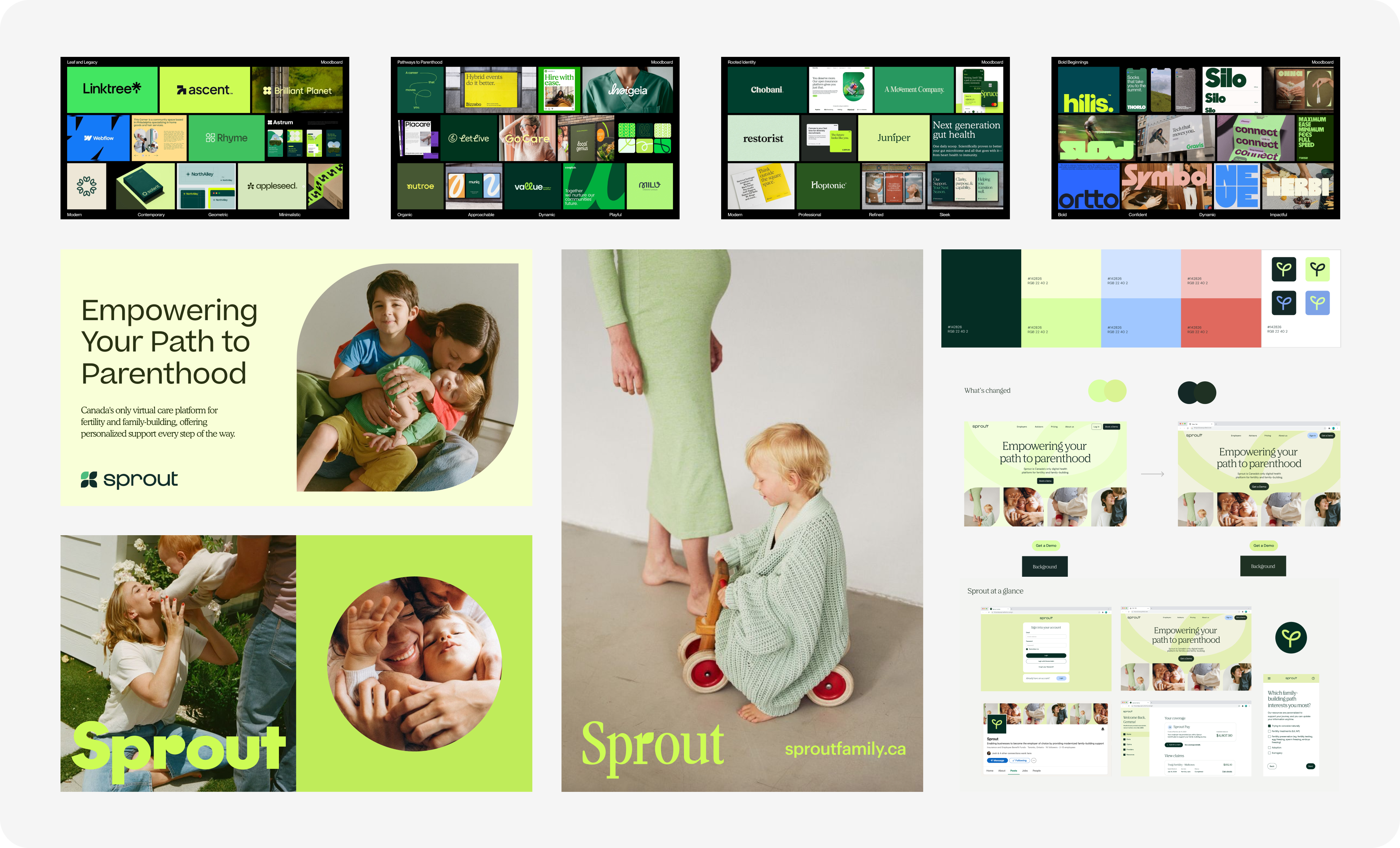
We landed on a concept we called Pathway to Parenthood. Evolving from a more organic and simplified interpretation of our original leaf icon, the looped, illustration-style “T” in our Sprout wordmark became a visual expression of the many non-linear paths people take on their journey to parenthood. When used as a large, textural background element, the icon reads more literally as a path, reinforcing the idea of movement and progression. Alongside this work, we partnered with content strategist Erica Salvalaggio to shape our narrative with a more human, empathetic approach under this guiding concept.
With a startup-sized budget, it was clear that outsourcing things like custom illustration work wouldn’t be a realistic part of our brand toolkit at this stage. Instead, photography became one of the most important pillars of our visual identity, and a key way for us to stand out.
Making Space for Real Stories
We made a conscious decision to move away from traditional stock photography.
Family-building is deeply personal and often sensitive. Images of visibly pregnant people or idealized outcomes can be triggering for many, particularly those navigating long or complex journeys. While pregnancy is part of the story and can be a powerful symbol of hope, it is not the whole story. Our users are often in the process of trying to grow their families, not necessarily actively parenting yet. We wanted our visuals to feel human, respectful, and real, reflecting both the hope and uncertainty inherent in family-building, without prescribing what someone’s journey should look like.
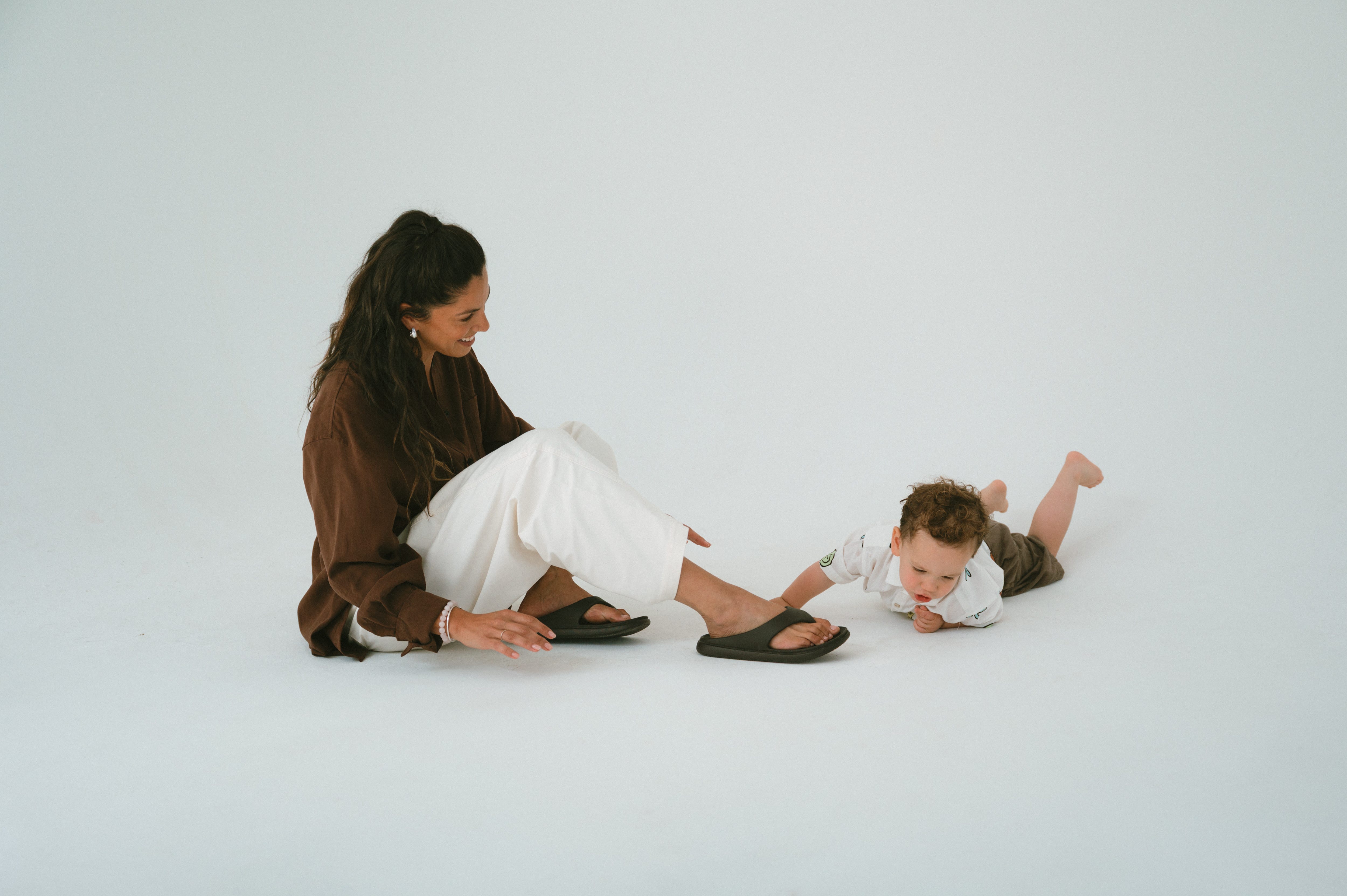
That led us to invest in a photoshoot where we could create and own our own imagery. Rather than paying models to portray a version of a family-building journey, we chose to celebrate real people and families across a range of paths to parenthood, many of whom had experienced more complex routes such as fertility treatments, surrogacy, or adoption. Our goal was to capture the strength, love, and resilience behind these experiences, and to use the images across our website, marketing, and educational materials to better reflect and connect with the community we serve.
With this concept in mind, I immediately knew we should work with lifestyle photographer Erin Leydon. Erin also photographed our wedding and was with us the night the twins were born (a full-circle moment!) She is a portrait, wedding, and lifestyle photographer, frequently featured in Toronto Life, with a rare ability to capture people as they truly are. Her background in real-life storytelling aligned closely with what we were trying to achieve.
From there, it wasn’t difficult to find people within our networks who were willing to participate, all of whom had experienced these barriers firsthand and wanted to help shape a more honest representation of this space. As a bonus, they would also walk away with meaningful photographs to cherish. Win-win.


You can read more about one of these participants, Emily, and her surrogacy journey in our How We Got Here series.
Bringing the Brand to Life
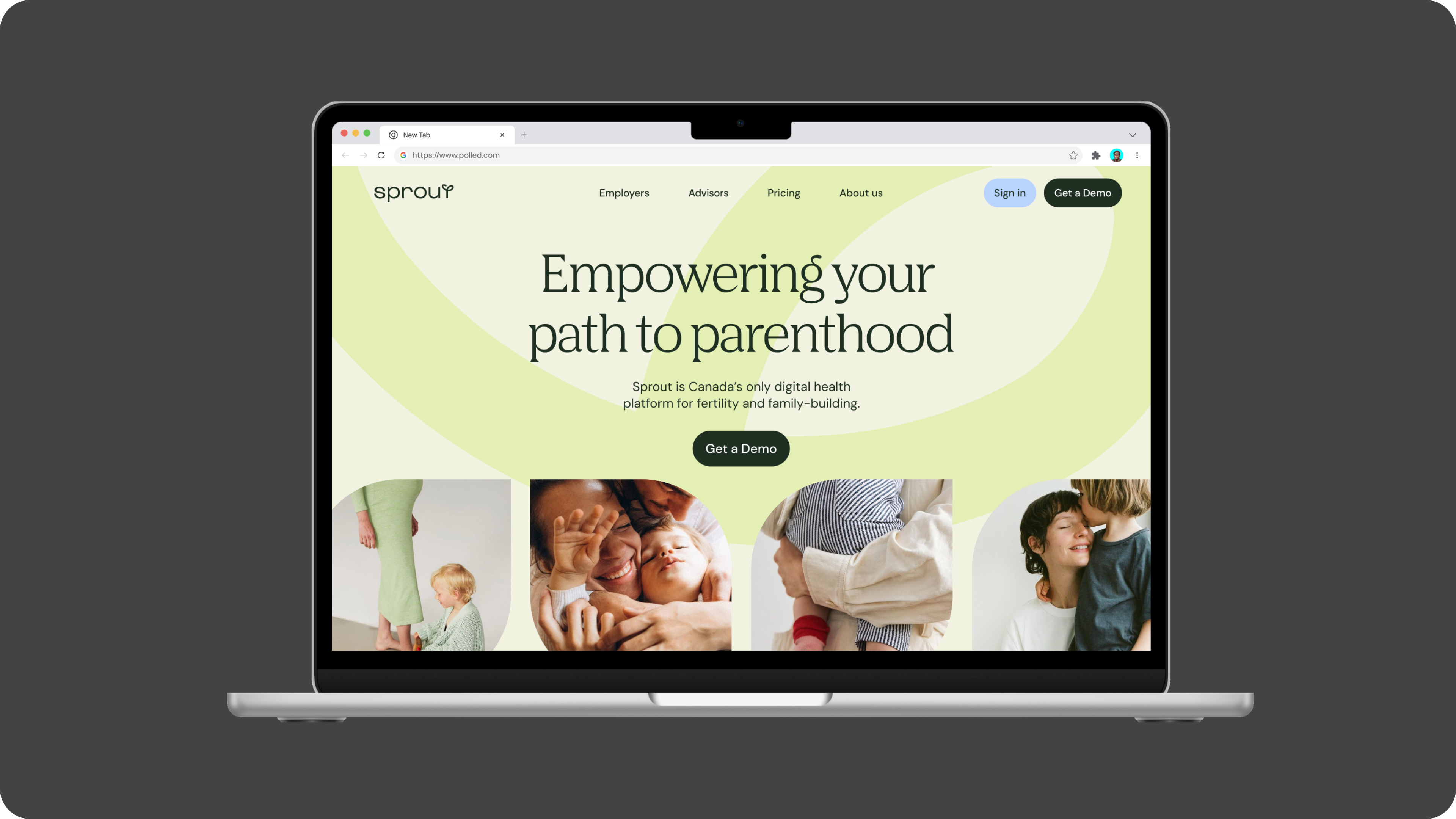
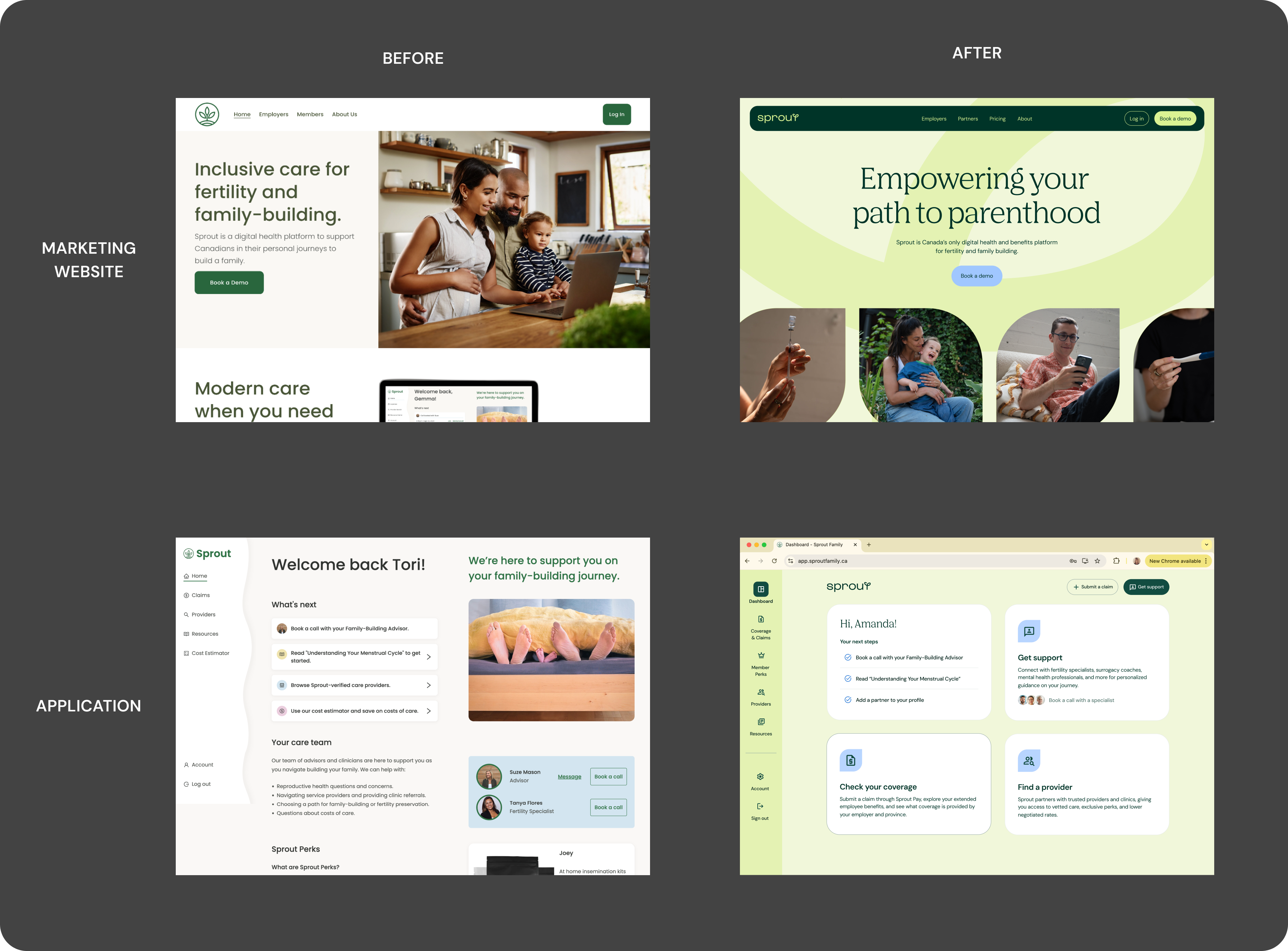
Our marketing website became the first real proof of concept for the rebrand. We partnered with Beqi, a Webflow development studio, since we only had one developer fully dedicated to the application at the time and needed additional support to bring the site to life.
The goal was to translate the brand into a clear, engaging narrative. We brought together our photography, colour palette, and strategically curated font choices to create a website that clearly communicated our mission and how we support people throughout their journeys. We also worked with freelance animator Raff Torres to develop product abstractions that offered a glimpse into key in-app features.
In parallel, we continued evolving the product itself. With the recent launch of the app updated to reflect the new brand look and feel, we’ve gained new insight into how people move through the experience, where things feel intuitive, and where there’s room to improve.
Designing in this space is never finished. It’s a continuous loop of listening, learning, and improving.
Looking Ahead
As Sprout continues to grow, our focus remains the same: expanding thoughtfully, listening closely to our customers, and improving the experience at every touchpoint.
We’re continuing to explore how Sprout’s offerings can better support people, not just through family-building, but across the broader care journey that surrounds it.
For me, this work sits at the intersection of design, purpose, and lived experience, and that’s a place I feel incredibly grateful to be.
Firstly, I'm all for this behind-the-scenes meets personal story approach to brand building. Much in the way babies are (lol), brands don't just appear in the world fully formed. Good brands at least are shaped by the experiences of the people that made them. None of this is linear, as you say, and that's a good thing! Secondly, I love what you said about paying attention when values align - so important! I think in Japan they call it 'ikigai': where passion, purpose, and skill intersect (I'm botching it probably). Great read!